Challenges and Requirements of Science and Technology Cooperation among Muslim Scientists
The 6th Science and Technology Exchange Program (STEP), Mustafa(pbuh) Science and Technology Foundation (MSTF), Tehran, Iran, Nov. 2019
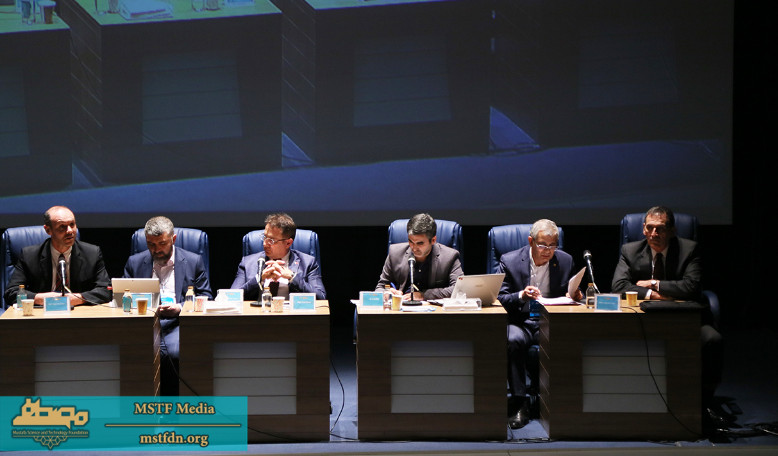
A panel discussion on priorities of science and technology cooperation in Islamic countries was held at Alzahra University with representatives from Iran, Malaysia, Azerbaijan, and Turkey on 9 November.
Events of this kind are held every six month by MSTF that looks for developing science and technology exchange among Muslim scientists, explains Dr. R. Assadifard, the faculty member of TSI and moderator of the panel. He adds that Mustafa Foundation as an NGO has already initiated improving scientific cooperation in Islamic countries and introduced Mustafa prize, awarded biannually to winners in different scientific areas including biology, nanotechnology, ICT, and etc.
This foundation also holds annual conferences and summits to develop collaboration and interaction among Muslim scientists. The recent panel discussion “priorities of science and technology cooperation in Islamic countries” with participation of representatives from Iran, Malaysia, Azerbaijan, and Turkey hosted by Alzahran University on Saturday 9 November was another attempt to meet this end.
Some of the discussed topics, according to Dr. Assadifard include drawbacks of developing scientific networking and cooperation between Muslim countries and lack of required infrastructures especially those necessary for human resources mobility. Visa policy and expensive travel costs also impede the cooperation and hence it was suggested that Mustafa foundation can help with such problems by introducing some support mechanisms.
Dr. Assadifard’s account of the panel points that as knowledge exchange and interaction among talents requires knowing one another, it is critically important to build a database that provides update information about the scientists and their achievements and capabilities as well as scientific centers of the Islamic nations. Western countries have already created such infrastructures for their scientists and they enjoy a high level of interaction and collaboration as a result. Therefore, it was suggested that an important priority would be development of a database with the support of Mustafa foundation.
Finally the panel members stressed that such events will definitely pave the way for knowledge exchange and dialogue among scientists of the Muslim countries.