Specialized Meeting on the Assessment and Ranking of Smart Cities in Iran Held
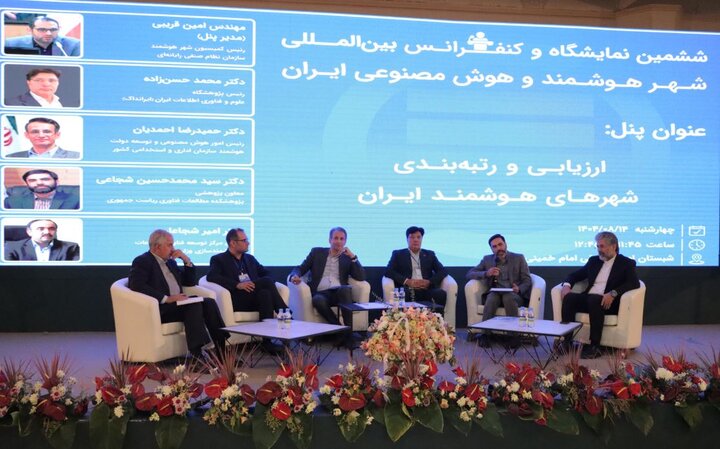
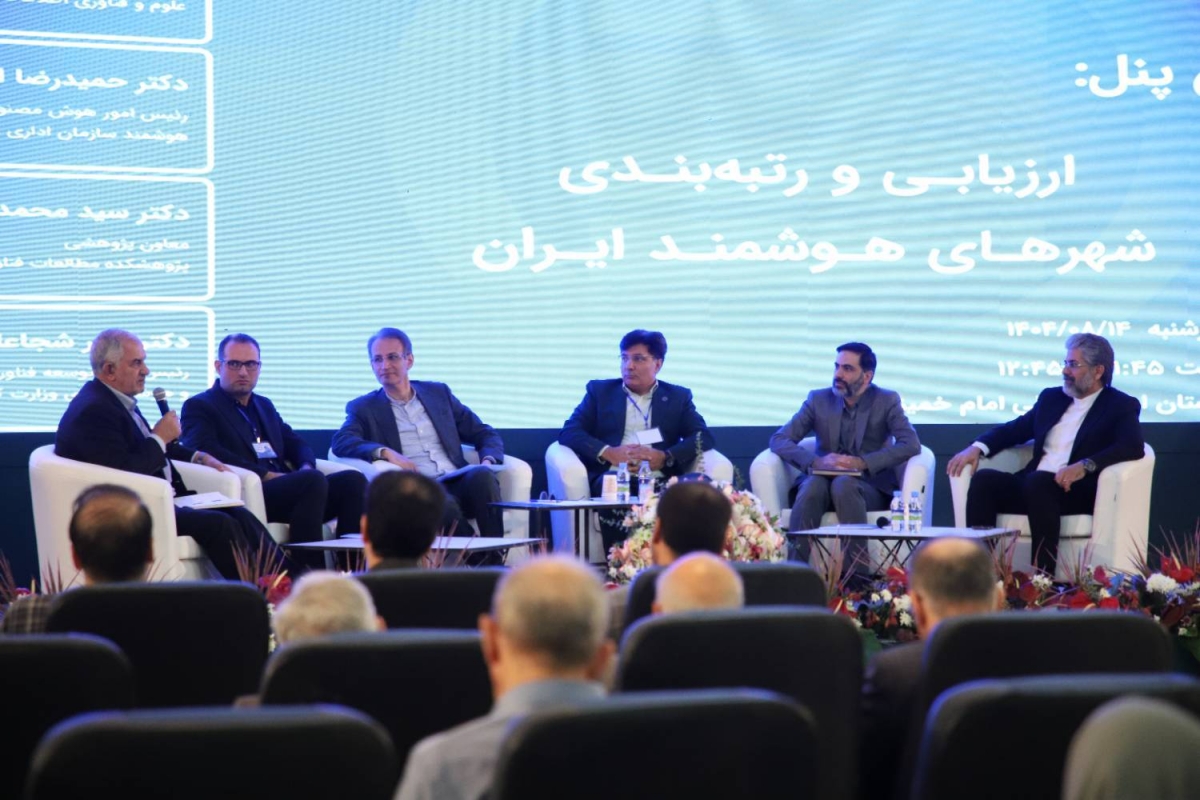
According to the Islamic Republic of Iran Broadcasting (IRIB) News Agency, the specialized panel entitled “Assessment and Ranking of Smart Cities in Iran” was held as part of the 6th Iran Smart City and Artificial Intelligence Exhibition, with the participation of a number of prominent managers, policymakers, and experts in the fields of smart cities and smart government.
The session was attended by Amin Ghoribi (Panel Chair) and Head of the Smart City Commission of the Computer Guild Organization; Mohammad Hasanzadeh, President of the Iranian Research Institute for Information Science and Technology (IranDoc) and Scientific Secretary of the Iran Smart City and Artificial Intelligence Conference; Hamidreza Ahmadian, Head of Artificial Intelligence and Smart Government Development Affairs at the National Administrative Organization; Seyed Mohammad Hossein Shojaei, Deputy for Research at the Presidential Research Institute for Technology Studies; Amir Shoja'an, Head of the Information Technology Development and Smart Systems Center at the Ministry of Interior; and Nasrollah Jahangard, Faculty Member of the Information and Communication Technology Research Institute.
The participants emphasized the necessity of establishing a national assessment and ranking system for cities across the country, as well as designing a model of excellence for smart transformation.
Mohammad Hasanzadeh, Scientific Secretary of the Iran Smart City and Artificial Intelligence Conference, outlined global approaches to smart cities and reviewed existing standards and guidelines. He also provided insights into the proposed ranking system for smart cities in Iran. Subsequently, Nasrollah Jahangard, a faculty member of the Iran Telecommunication Research Center and Secretary of the Supreme Council of Information Technology, along with Vahid Heydarian, Director of the Traffic Control and Video Surveillance Center of Isfahan Municipality, presented their perspectives on national approaches to smart city development and the importance of monitoring progress indicators.
During the panel, it was emphasized that the first step toward developing smart cities is to understand their current conditions and assess their levels of smart maturity. Without a clear understanding of each city's strengths, weaknesses, capacities, and challenges, designing an effective development model and planning for smart transformation would not be possible in a targeted and systematic manner.
Amin Ghoribi, the panel chair, referring to the experiences of leading countries in this field, stated: “The assessment and ranking of smart cities is not merely a comparative tool; rather, it serves as a roadmap for identifying the current status of cities and guiding them toward excellence, innovation, and sustainable development.”
In this regard, a specialized organization is being established in cooperation with the Ministry of Interior, the Iranian Research Institute for Information Science and Technology (IranDoc), and the Presidential Research Institute for Technology Studies, with the support of relevant institutions. It was also decided that the Iran National Smart City Award would enter its implementation phase following the conclusion of the Smart City Exhibition and Conference.
The award aims to foster healthy competition among cities, encourage the implementation of impactful smart city projects, and recognize the country's leading cities. Furthermore, according to the initial resolutions, the primary basis for assessments will be the International Organization for Standardization (ISO) indicators in the field of smart cities. In subsequent stages, assessments will also be conducted in accordance with other international frameworks, including United for Smart Sustainable Cities (U4SSC), as well as nationally adapted indicators, allowing for a complementary, multi-framework approach to evaluation and analysis.
This multi-layered approach will enable balanced and comprehensive assessments of cities in terms of infrastructure, services, sustainability, governance, and innovation. It can also serve as a foundation for designing an excellence model and supporting the development of smart cities across the country. At the international level, it will make it possible to compare Iranian cities with cities around the world.
The participants also emphasized several common priorities, including drawing on international experiences in smart city ranking, ensuring realism and accuracy in the analysis of ranking data, facilitating data collection and presentation processes, establishing institutional coordination among stakeholder organizations, linking city rankings to government support mechanisms, encouraging private-sector participation, and utilizing the capacities of the Law on the Knowledge-Based Production Leap to advance smart city development.
At the conclusion of the session, participants stressed the importance of implementing the assessment and ranking system for smart cities in Iran, strengthening coordination among government agencies and research institutions, and leveraging the capabilities of the private sector and knowledge-based companies to implement this initiative.